

The Power of Patience: What a Plant Taught Me About Investing
August 6, 2026
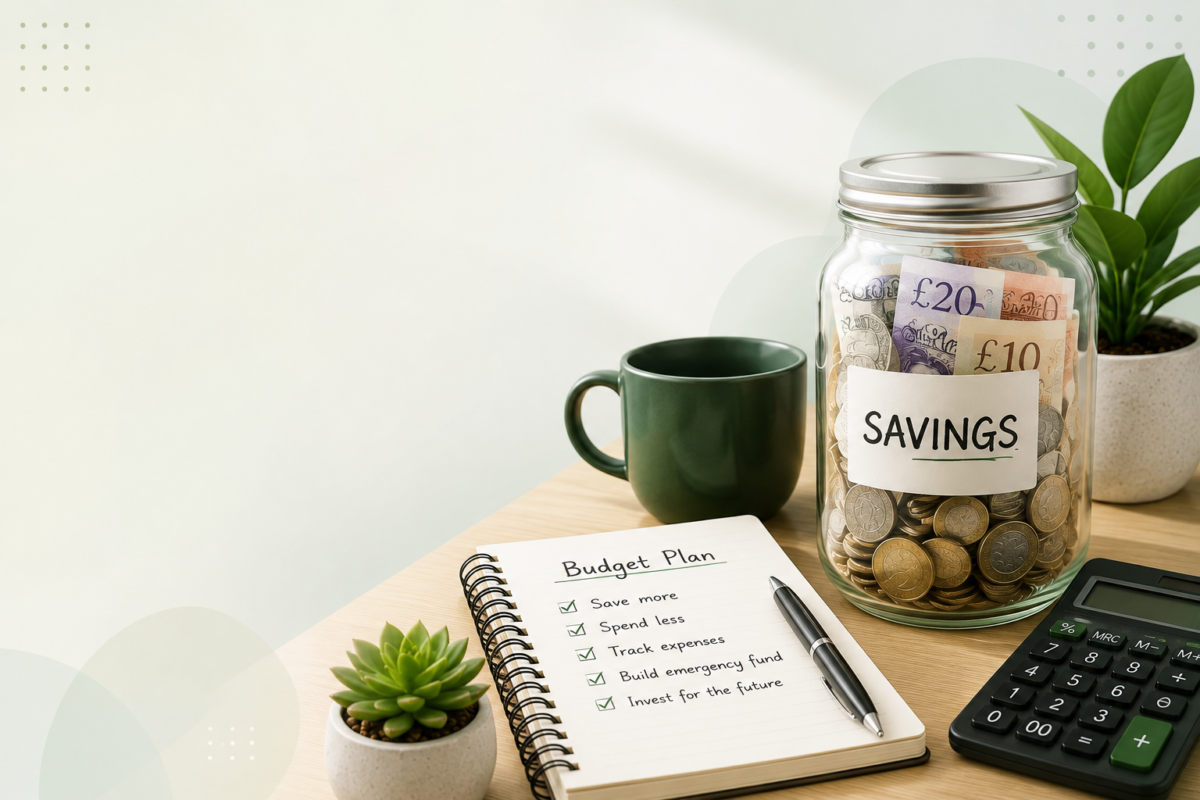
Sophie and Josh start the same graduate job on the same salary, in the same month (January). By December, Sophie has just over £3,000 sitting in a savings account. Josh has £180 and a nagging feeling he “should really start saving soon.”
Neither of them got a bonus. Neither of them earned more than the other. The difference was a handful of small, unglamorous habits, the kind that never make it into a highlight reel, but quietly compound all year.
That’s really what this guide is about. Not a single dramatic money hack, but twenty-one small, specific habits. As Benjamin Franklin put it in Poor Richard’s Almanack nearly 300 years ago: “Beware of little expenses; a small leak will sink a great ship.” The advice is old. The maths behind it hasn’t changed at all. Let’s have a look at these habits;
PART 1: REDUCE EVERYDAY SPENDING
1. Declutter your home and turn unused items into cash. Most households have genuine value sitting in drawers and cupboards: old electronics, unused kitchen appliances, furniture, sports equipment, and clothing. Selling these through Facebook Marketplace, Vinted, or local resale groups can realistically bring in anywhere from £200 to £2,000 a year, depending on what you have. The habit that matters more than the selling itself: transfer that money straight into savings rather than treating it as spending money.
2. Unsubscribe from retail marketing emails. Retailers spend heavily on “limited-time offer” emails because they work. Such emails cause you to make purchases you weren’t planning to make. Ten minutes spent unsubscribing removes a steady stream of temptation. If you genuinely need something later, you’ll find it without a nudge.
3. Think in terms of cost per wear. Before buying clothing, ask: how many times will I realistically wear this? A £90 winter coat worn 150 times costs 60p per wear, excellent value. A £45 top worn twice costs £22.50 every time you put it on. This single mental shift steers you toward fewer, better purchases instead of impulse buys.
4. Pack lunch more often. This is one of the most measurable habits on this list. UK workers spend an average of £15 to £20 a week on lunch, according to 2026 research from Moneypenny. Separate research into meal deal habits found that buying a meal deal every working day comes to roughly £909 a year, compared to around £464 a year for a packed lunch, a saving of close to £445. Sunday meal prep turns this from a sacrifice into a five-minute-a-day convenience.
5. Always shop with a grocery list. Supermarkets are laid out, quite deliberately, to encourage impulse purchases, that’s simply good retail design, not something to resent. Walking in without a list reliably results in extra snacks, drinks, and “just in case” items. The fix is unglamorous: check what you already have, plan meals for the week, write a list, and stick to it.
6. Reduce food waste. According to WRAP (the Waste and Resources Action Programme), the average UK household throws away roughly £470 worth of food every year. Food that was bought, not used. Freezing extra portions, cooking from what’s already in the fridge, rotating older items to the front, and running the occasional “leftovers night” all chip away at that figure directly.
7. Shop second-hand first. Before buying furniture, baby items, sporting equipment, or home décor new, check charity shops, Facebook Marketplace, and second-hand platforms first. Buying pre-owned isn’t a downgrade in quality, it simply means someone else absorbed the first year of depreciation. Shoppers commonly save somewhere in the range of 40% to 80% compared with buying new.
Small, repeatable improvements like these tend to outlast dramatic budget cuts, mainly because they don’t require ongoing willpower once the habit sets in.
PART 2: LOWER YOUR MONTHLY BILLS
Unlike a one-off sale or a single frugal month, a lower recurring bill keeps paying you back every month without any further effort.
8. Audit your subscriptions every three months. This is worth taking seriously: the average UK adult now spends £38.18 a month on subscriptions, about £458 a year. According to 2026 Monzo research, roughly one in five people don’t actually know how many subscriptions they’re paying for. Separately, HSBC UK’s “Invisible Spending” research found the average person wastes about £61 a year on services they’ve forgotten to cancel. Every three months, go through your bank statement and ask: do I still use this, and could I switch to a cheaper tier? Cancelling just three £15-a-month subscriptions saves £540 a year with zero change to your income.
9. Review your insurance annually for price and for adequacy. Insurance loyalty rarely pays in the UK market; premiums shift constantly, and providers don’t always reward long-standing customers with their best rate. Once a year, compare quotes for car, home, life, and (where relevant) health insurance. Modest savings of £20 to £50 a month are common when switching or renegotiating. At the same time, check the other direction too: insurance exists to protect your progress, not just your wallet. If others depend on your income, make sure your cover, particularly life and income protection, genuinely matches your circumstances. A single uninsured setback can undo years of careful saving.
10. Reduce your utility bills. According to the Energy Saving Trust, turning your thermostat down by just 1°C can save around £90 a year in a typical GB home at current price cap levels. Layer in a few more habits: LED bulbs, washing on cold, running full loads, switching off standby appliances, and you can produce combined savings in the region of £150 to £300 a year for most households.
11. Refinance high-interest debt, when it genuinely makes sense. UK credit card interest rates are currently at their highest level in more than 30 years. The Bank of England put the average rate at roughly 24.7% in late 2025, and the average Briton is estimated to be carrying around £1,400 in credit card debt, generating an estimated £342 a year in interest alone. If you have reasonable credit, consolidating that debt onto a 0% balance transfer card or a lower-rate loan can meaningfully cut what you pay. Refinancing only makes sense, if you compare the full picture: rate, term, and fees rather than chasing a lower monthly payment that stretches the debt out for longer.
PART 3: BUILD BETTER MONEY HABITS
Cutting expenses helps once. Building habits helps indefinitely.
12. Create a budget every month, not once a year. No two months look the same; holidays, birthdays, and seasonal costs all shift the picture. Rather than reusing one static budget, build a fresh one each month around your actual expected income and expenses. A clean, simple framework to start from:
-
- 50% needs (housing, bills, groceries, transport)
-
- 20% wants (everything discretionary)
-
- 20% savings and investing
-
- 10% giving
That’s one consistent framework you can adjust to your own goals. The key is that it should always add back up to 100%.
13. Track your spending for 30 days. One of the fastest ways to improve your finances is simply seeing, in full, where the money actually goes. Track every expense for a month, coffees, delivery apps, subscriptions, impulse buys included. Most people are surprised by how much slips out through small, “convenience” purchases once it’s all in one place.
14. Use a savings challenge. Structured challenges make saving feel like a game rather than a chore. The classic 52-week challenge. Saving £1 in week one, £2 in week two, and so on… adds up to exactly £1,378 by the end of the year, almost without noticing it happen. No-spend weekends and no-spend months work on the same principle. The best challenge is simply the one you’ll actually finish.
15. Find an accountability partner. Financial goals are considerably easier to stick to when someone else is checking in. A partner, a sibling, a friend, or a financial coach. Regular, low-key check-ins help maintain momentum and turn abstract targets into something worth celebrating when you hit them.
16. Practice delayed gratification. Before any non-essential purchase, build in a deliberate pause, 24 hours for smaller items, 30 days for larger ones. More often than not, the urge fades before the waiting period ends. This isn’t about deprivation; it’s about making sure spending reflects intention rather than impulse.
PART 4: MAKE SAVING AUTOMATIC
The most reliable way to save consistently is to remove the decision entirely.
17. Automate your savings. Set up a standing transfer from your current account into savings the moment you’re paid. Because the money never sits somewhere convenient to spend, you’re far less likely to touch it. Consistency compounds faster than most people expect:
| Weekly Saving | Annual Total |
| £10 | £520 |
| £25 | £1,300 |
| £50 | £2,600 |
| £100 | £5,200 |
18. Put spare change to work. Many UK banks now offer automatic round-ups on card payments, sweeping the difference into savings. A £3.45 coffee rounds to £4.00, banking 55p automatically. It sounds trivial in isolation, but stacked across dozens of small purchases a month, it adds up with zero ongoing effort.
19. Save every pay rise or windfall. When income goes up, the instinct is to let spending rise by the same amount, a pattern economists call lifestyle inflation. A better default: save half of any pay rise or windfall, invest part of it, and only let the remainder lift your day-to-day spending. This is what allows wealth to actually grow alongside income, rather than simply funding a bigger version of the same lifestyle.
20. Build a genuine emergency fund. This is arguably the most important habit on this entire list. Official ONS data from January 2026 found that 21% of households in Great Britain could not afford an unexpected expense of £850, meaning roughly one in five households is a single car repair or boiler breakdown away from a real financial crisis. Aim to build a starter emergency fund of around £1,000 first, then work toward three to six months of essential living expenses over time. Without it, unexpected costs typically end up on a credit card at close to 25% APR, turning a temporary problem into a much more expensive, longer-lasting one.
The five habits worth prioritising first
Not every tip on this list carries equal weight. If you’re only going to act on a handful, start here:
-
- Automate your savings
-
- Cancel subscriptions you don’t use
-
- Plan meals and reduce food waste
-
- Build a starter emergency fund
-
- Pay down high-interest debt aggressively
These five deliver the largest financial return for the least ongoing effort. Once they’re running in the background, everything else on this list becomes far easier to layer on top.
WHERE THE BIGGEST WINS ACTUALLY ARE
| Habit | Estimated Annual Saving |
| Pack lunch instead of buying it | £445 |
| Cancel two unused subscriptions | £360 |
| Cut grocery spend by £25/week by shopping with a list. | £1,300 |
| Shop second-hand | £500+ |
FREQUENTLY ASKED QUESTIONS
What’s the fastest way to start saving money? Cut recurring costs first, then automate what’s left. Reviewing subscriptions, setting a grocery budget, and scheduling an automatic transfer on payday will typically move the needle faster than any single spending cut. Saving just £25 a week grows into £1,300 in a year. Consistency matters far more than the starting amount.
How much should I save each month? A reasonable starting point is at least 20% of income, using a simple 50/20/20/10 framework: 50% needs, 20% wants, 10% savings and investing, 10% giving (optional, and only if that’s part of your values). If 20% isn’t realistic yet, start with 5% or 10% and increase it whenever you get a rise, a bonus, or clear a debt.
What are the biggest money wasters? Commonly overlooked culprits include unused subscriptions, daily bought lunches or coffees, frequent takeaway delivery, impulse online shopping, high-interest credit card balances, grocery shopping without a list, and energy left running unnecessarily. A monthly bank statement review tends to surface most of these quickly.
Should I save money or pay off debt first? It depends on the type of debt. High-interest debt, credit cards in particular, currently averaging close to 25% APR in the UK, should usually take priority, since that interest rate will typically outpace anything you’d earn by saving instead. That said, it’s still worth keeping a small buffer, often around £1,000, so an unexpected bill doesn’t force you back onto the same high-interest card you’re trying to clear. Once high-interest debt is under control, build toward three to six months of expenses in an emergency fund before increasing investment contributions.
Can small savings really make a difference?
| Weekly Saving | One Year | Five Years |
| £10 | £520 | £2,600 |
| £25 | £1,300 | £6,500 |
| £50 | £2,600 | £13,000 |
| £100 | £5,200 | £26,000 |
NB: Excludes any investment growth or interest. Savings only.
Small, weekly habits compound into meaningfully larger numbers than most people expect, and they tend to outperform occasional large, one-off deposits simply because they don’t rely on remembering to act.
How can I save money on groceries? Plan meals before shopping, write and stick to a list, buy store-brand where quality is comparable, favour seasonal produce, compare unit prices rather than package prices, avoid shopping while hungry, and freeze anything at risk of spoiling. Cutting the weekly shop by just £25 saves roughly £1,300 a year.